 Planting Tips

 Bamboo Plants
 Berry Bushes
 Flower Bulbs
 Flowering Trees
 Fruit Trees
 Grape Vines
 Nut Trees
 Palm Trees
 Shade Trees
 Shrubs & Hedges
 Wildlife Plants
New Jersey Trees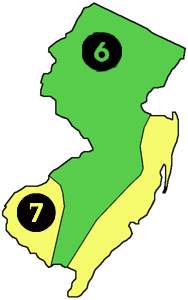 Buy New Jersey Fruit Trees, Flowering Tree, Bamboo-Berry Plants,Seedless Grape Vines, Shade Tree and Nut Trees.Most New Jersey gardeners are looking for fruit trees and berry bushes that will bear good crops as early as possible. The gardener considers whether to buy and plant a large tree or to plant a fast growing tree. The mistake about planting a fast growing tree is that the cell walls are drastically elongated and enlarged, and therefore, the lignin and cellulose acting as an insulator - that is normally deposited into the cell walls is much less, and that can lead to damage or killing of the fast growing trees during a sudden frigid temperature drop. Sometimes it is advisable to set out a slow growing tree that has previously been found to be a cold hardy tree and that avoids that problem. New Jersey is known as the “Garden State,” and the State tree is a shade tree called the Northern Red Oak Tree (Quercus rubra) .Many other shade trees are excellent to plant in the gardens of New Jersey. The Sassafras tree and the Green Ash tree grow into very large shade trees, and the brilliant yellow leaf color in the fall is dramatic. The Ginkgo tree, the Sour Wood trees and Sweet Gum tree are all cold hardy and in the fall are covered with bright colors of purple, red and yellow. The Sycamore trees, The rich soil in New Jersey is highly adaptable to numerous shade trees. Many oak trees and maples that are native to New Jersey are used in home landscapes. Tulip Poplar tree and Weeping Willow trees are cold hardy and are fast growing trees. The Lombardy poplar tree can grow over 8 feet in just one year and grows into a perfect wind breaker or privacy screen when plant close to one another in long rows. The Catalpa tree (fish bait worm tree) and the Japanese Magnolia trees are good selections of shade trees and also beautiful flowering trees. Agriculture is extremely important in New Jersey, NJ fruit trees are highly promoted by Rutgers University. Popular N.J. Flowering trees are Japanese flowering cherry, dogwood (Cornus florida) and white Cleveland flowering pear trees are among the first trees to bloom in the spring. The crape myrtle trees are wonderful long blooming trees that flower in colors of red, pink and white, and new rare dwarf crape myrtle trees flower in colors of Black Diamond (Black Leaves), True Blue and Lavender. The red Thundercloud flowering plum tree has red leaves and pink flowers, and flowering peach colors of peppermint red and white are early bloomers. The Pink flowering apricot tree is the earliest flowering tree bloomer. A wide range of NJ temperatures on USDA zone maps of zone 5, 6 and 7 favor sweet and sour cherry tree production and many fruiting cherries are commercially grown as well as in the backyards of many New Jersey homes. Apple trees are not self pollinating, so that two separate apple tree cultivars must be planted to produce apples. Peach trees are very important orchard trees for the New Jersey truck farmers, along with various plum trees that can produce red, blue or yellow plums. The nectarine tree has appeared to displace peach trees in many orchards, because the grocery stores find that customers prefer to buy a nectarine slick skin fruit, that is actually a fuzzless peach. The New Jersey apricot trees are very cold hardy and mature with a honey-like sweetness when they begin to soften. Nut tree are favorite plants in the NJ garden. The most favored New Jersey nut trees are the American black walnut trees, English Walnut trees, and chestnut trees. The pecan Northern cultivars tree nuts are best adapted to N.J. temperatures, and the Thomas Black walnut trees are often loaded with black walnuts the first year of planting. The American filbert tree is a dwarf tree and a heavy producer of hazelnuts. The Hall's hardy Almond tree produces almonds in the summer that are oily, crunchy and delicious. The Chinese chestnut tree is prolific in nut production when maturity, and the American chestnut tree has been hybridized to produce a blight resistant strain that produces large crops of nuts. Blueberry plants are a very important crop in New Jersey where 40 million dollars worth are produced commercially each year, where the nearby blueberry plant research center Beltsville, Md .has produced blueberries that are perfect for the rich organic soil types at N.J. home orchards. The Blueberry research station has also produced and supervised Rabbiteye type blueberry plants that are not native to NJ soils but originated from outcrops of wild blueberry plants in Southern soils. These Rabbiteye blueberry plants are also being tested in New Jersey for lengthening a possible season extension crops of blueberries. Exotic fruits and rare fruit of Medlar trees, Jujube, Paw Paw tree can be successfully grown in New Jersey and several grafted Mulberry tree cultivars produce heavy crops. The Jujube tree, Medlar and black mulberry trees will produce fruit the first year, if bearing sized fruit trees are planted in New Jersey gardens. Cold Hardy Fig Trees can be successfully grown to fruit, if the proper cold hardy fig tree cultivar is planted. From New Jersey, Ty Ty Nursery has received numerous reports of fig tree survival, whereas cultivars like the Cold Hardy, Tennessee mountain fig tree is grown, and the Chicago Hardy fig that survived in IL during the very low temperature drops in the year, 2014. The New Jersey government has promoted, not only fruit tree orchards for human consumption, but heavy government emphasis has been given by environmentalists to plant nut trees, berry plants and fruit trees for wildlife survival. Wildlife animals such as deer, turkey, geese and duck that depend on fruits, wildlife native berries and wildlife seeds that are found in NJ forests for survival : wildlife habitats in New Jersey must be protected for wildlife animals to prosper. The importance of wildlife conservation is clear to every lover of birds, animals and to hunters. The Kieffer pear tree is a hard pear that is slow to ripen in the fall, as is the American persimmon tree and the pear and persimmon fruit ripening emits a volatile scent that attracts game animals and wildlife game birds to eat the fruit as it drops beneath the trees. Other excellent wildlife fruits are the Chickasaw plum tree, the American crabapple tree and mulberry trees that are loaded with food that game animals love to eat. The autumn olive tree, the elderberry plants and the strawberry bush are easy food to reach by animals. The seedling wild pecan tree, the hickory nut tree and the American Chestnut trees drop their wildlife nuts intermittently during the fall and winter when winter food is difficult to find. The white oak tree at maturity grows bushels of acorns for birds and deer. The Gobbler oak tree grows small acorns that are easy for turkey to eat, and the fast growing sawtooth oak tree begins heavy acorn crops when it reaches 5 years old. Wine grape vines and bunch grapevines will grow and bear large clusters of fruit in New Jersey from experiments and researchers who introduced these cold hardy grape vines from Cornell University and the New York State Agricultural College that is located in Ithaca, New York. The Red Flame Seedless, Thompson 'white seedless grape and the Seedless Concord Grape Vines in New Jersey. Windmill palm trees are very popular in many Northern States such as New Jersey, and the windmill palm tree will survive the coldest winters in N.J. to give that exotic tropical look around pools and patios. Needle palm trees also grow well in New Jersey and even North into New York, but the windmill palm tree grows much faster than the needle palm that is considered a dwarf palm tree. Some New Jersey gardeners have planted another dwarf palm tree, called the best privacy blocker hedge that can be planted in New Jersey. New Jersey bamboo plants will form very large clumps of stems (culms, poles, stalks) in beautiful colors of blue, gold or black shiny canes that will survive the coldest winters, even minus 20F. Degrees, from Teaneck to Hoboken. The fast growing bamboo clumps will provide privacy and block out unwanted noise and automobile fumes and freshen your backyard air. New Jersey bamboo is easy to grow in soil that is moist and heavy in organic content that will stop soil erosion and provide you with a beautiful ornamental living background. In the Spring and Summer the bamboo plant will rapidly grow to 20 to 30 feet tall into a rapidly developing privacy screen. Order your New Jersey bamboo plants now from Ty Ty Bamboo Nursery ( tytyga.com) that will be sent by fast shipment to your home anytime during the year. For plant gardeners and tree lovers in New Jersey, Agave plants, Yucca trees and Aloe plants are interesting subjects that are armed with thick leaves with hard spiny, prickly thorns and sharp spikes at the leaf ends. The Yucca plants can grow into trees and mostly are cold hardy in all climate regions of NJ. The Joshua Tree, Yucca brevifolia is also called the 'Yucca Palm Tree' and weird and unearthly in forms that are strange and uncanny. The Spanish Bayonet, Yucca gloriosa can grow as tall as 16 feet and is covered with dangerous, hard stiff leaves that are pointed at the ends. The Yucca rostrata forms an elegant trunk and is drought resistant with straight pointed leaves. The Red Yucca plant has slender leaves with recurved filaments and the leaves turn red during the winter and a 3 foot tall flower spike is topped out with orange flowers. The Yucca filamentosa 'Color Guard' is brilliant with creamy white striping that is vibrant and stunning in the landscape when planted as a specimen. The Century Plants, Agave americana 'Marginata' are brightly variegated with white stripes. The Agave angustifolia 'Marginata' is a stiff leafed cluster of variegated daggers that are attached at right angles to the agave trunk. The well known Agave tequilana contains a sweet syrup that can be easily fermented into tequila, an alcohol drink. The Agave vilmoriniana 'Octopus' is covered with curling leaves that resemble octopus tentacles. The Agave attenuata is a spineless agave with a beautiful container form. The Aloe vera plant is a useful healing first aid plant used to cure fire ant stings, bee bites and cures skin wounds and flesh burns. |